
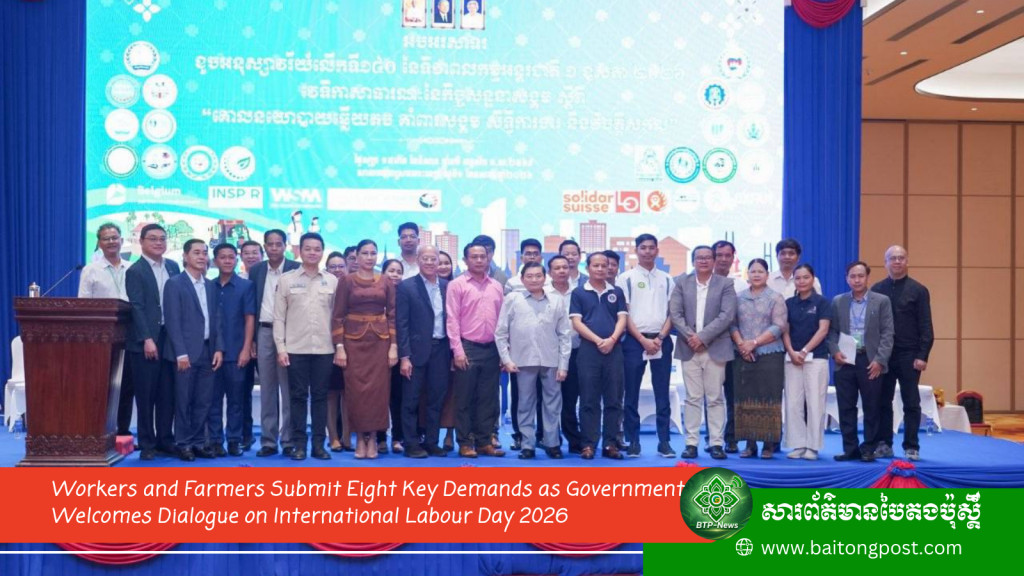
PHNOM PENH, May 1, 2026 — Workers, farmers and civil society representatives put forward eight key demands during the celebration of International Labour Day 2026, held under the theme of policies responding to social protection, labor rights, and global crises, while the Cambodian government expressed its willingness to engage and address challenges facing labour and livelihoods.
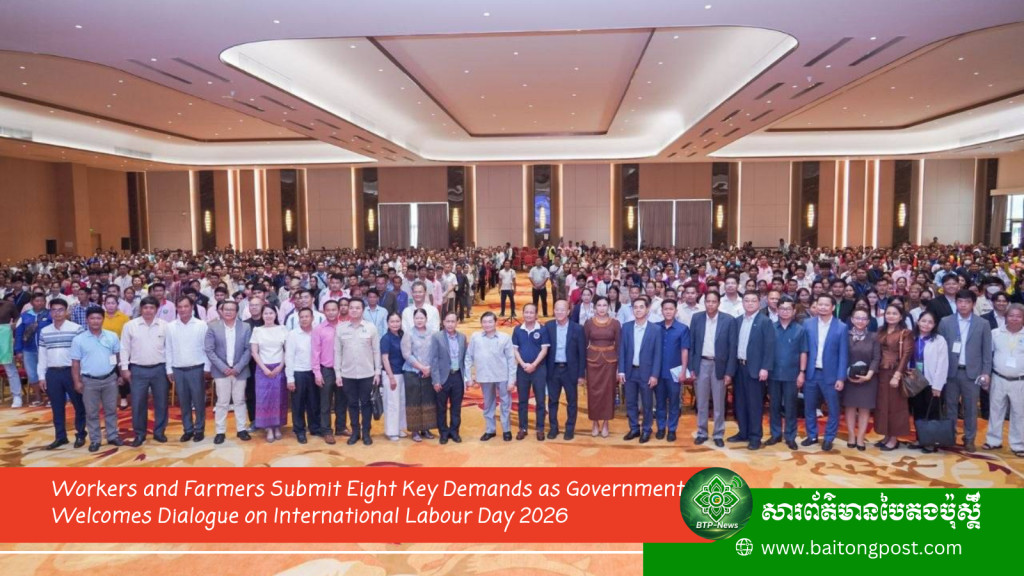
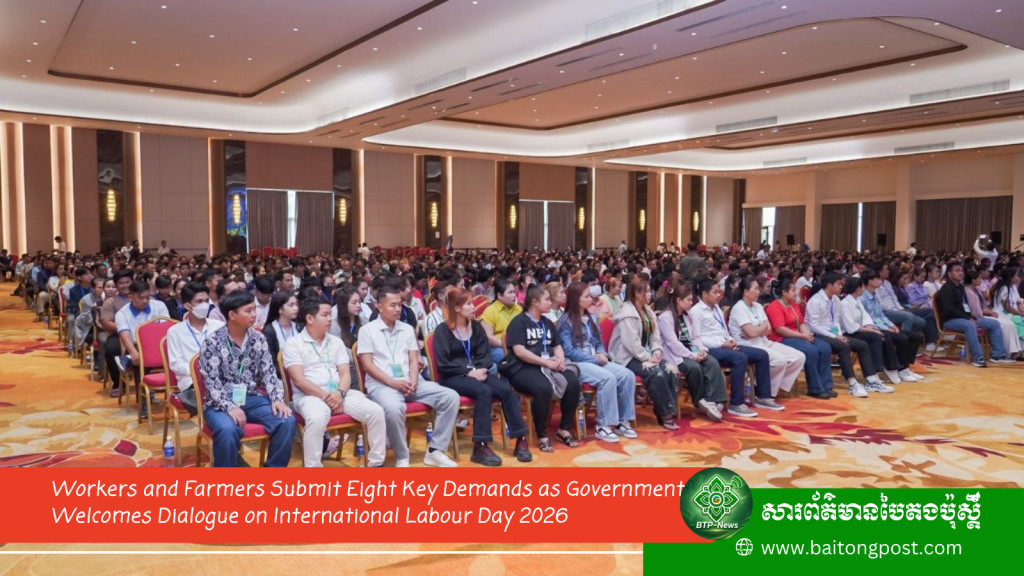
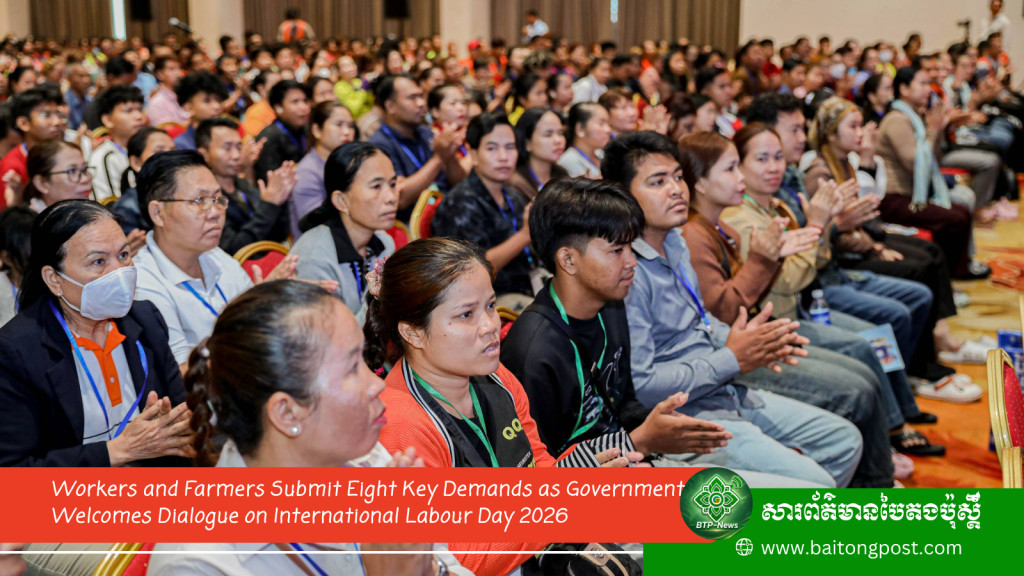
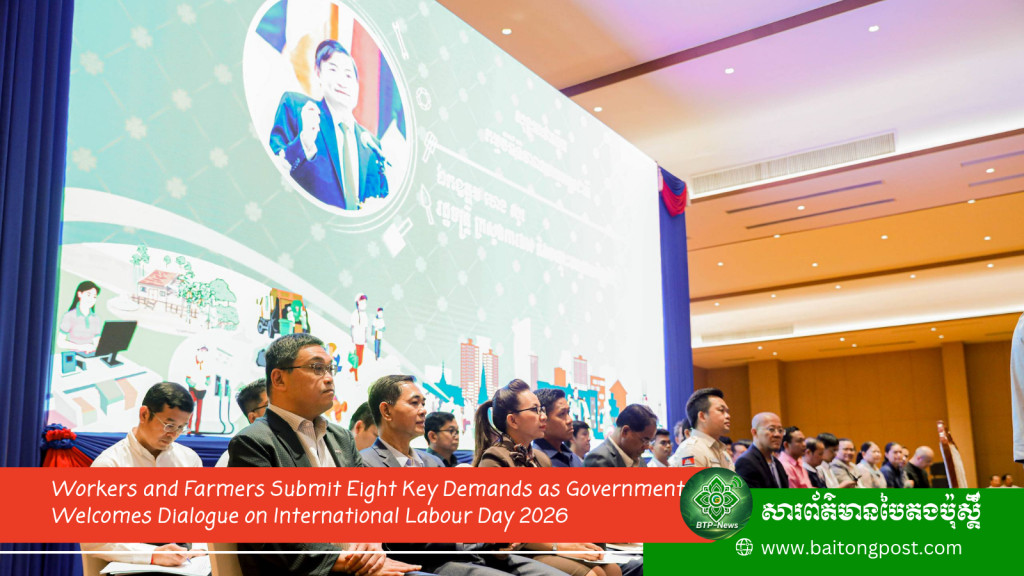
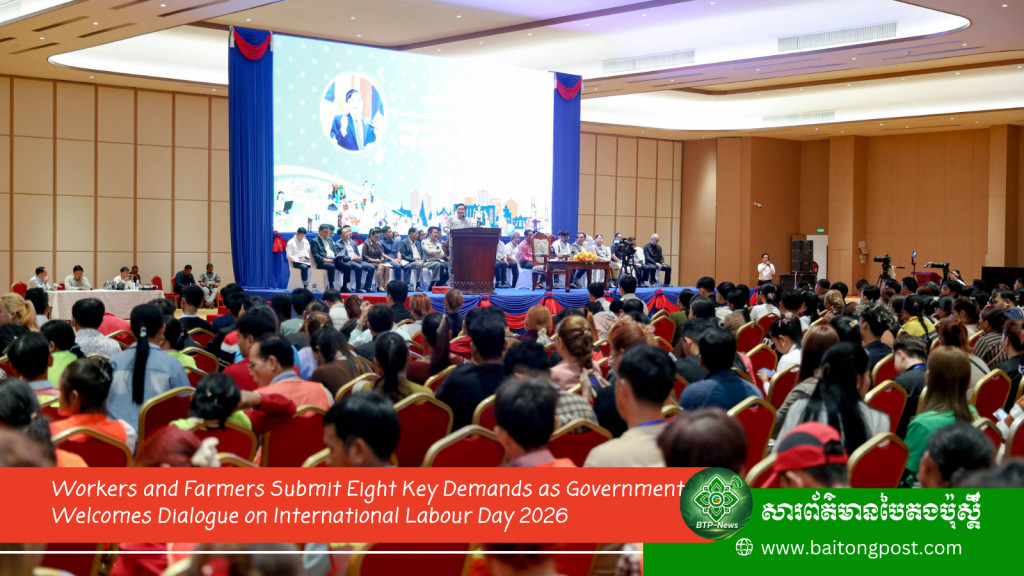
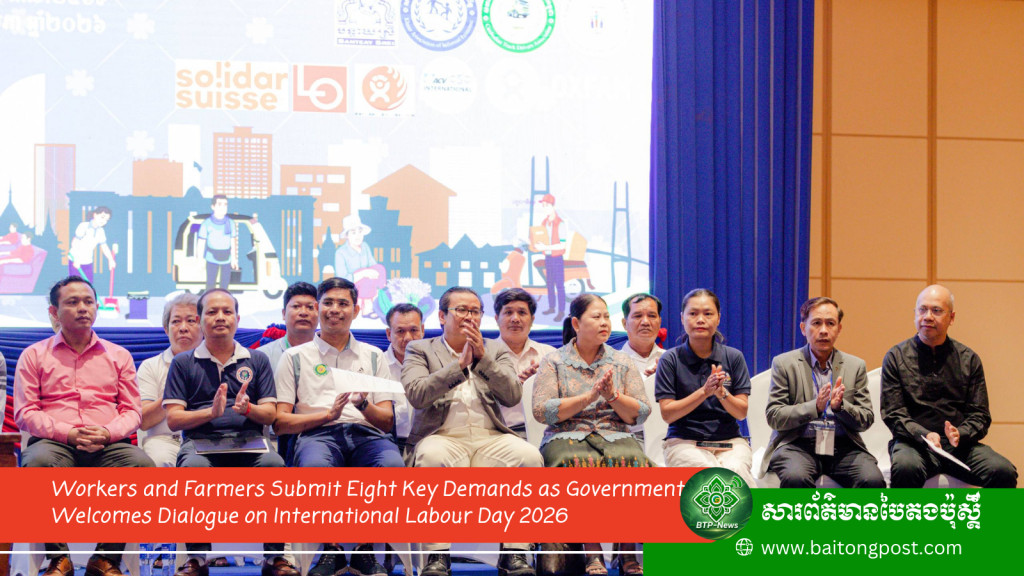
The event was organized by the Coalition of Cambodian Farmers Community (CCFC), in collaboration with the Cambodian Labour Confederation (CLC), the Cambodian Confederation of Workers (CCW), along with trade unions, associations and civil society organizations. It took place at Koh Pich Theatre Hall with nearly 1,300 participants from both formal and informal sectors.
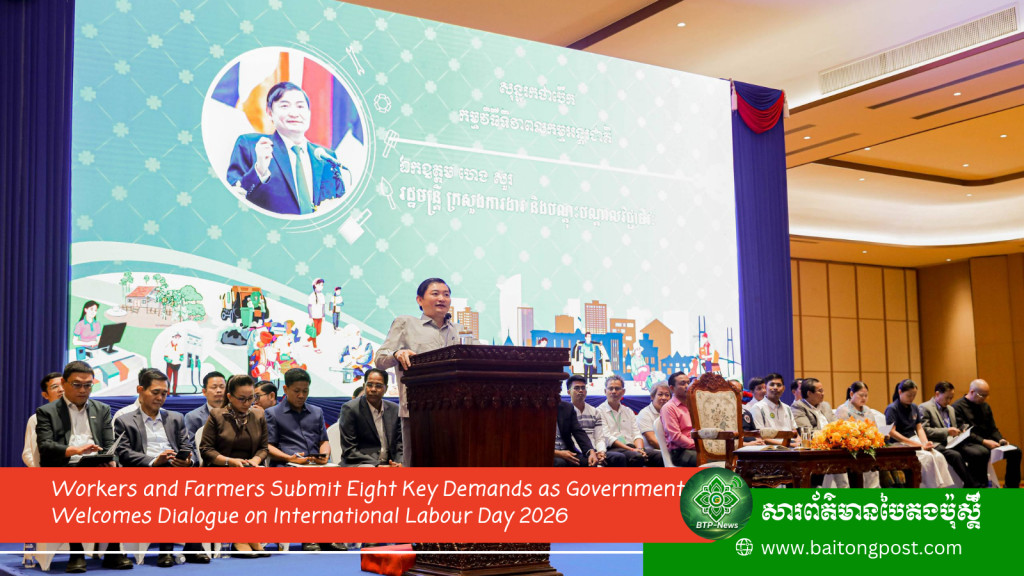
The ceremony was presided over by H.E. Heng Sour, Minister of Labour and Vocational Training, with participation from representatives of the Ministry of Industry, Science, Technology and Innovation, the National Social Security Fund, as well as delegates from the Ministry of Agriculture, Forestry and Fisheries, youth farmers, young workers and public officials. Participants shared practical experiences and challenges facing both labour and agricultural sectors.
During the event, trade union and civil society representatives stressed the urgent need to strengthen social protection systems to safeguard workers’ and farmers’ livelihoods, particularly amid global challenges such as economic uncertainty, climate change, rising fuel prices and job insecurity. They also called for effective enforcement of labour rights, including freedom of association, decent working conditions and fair wages.
Mr. Kong Athit, President of the Cambodian Labour Confederation (CLC), said that “International Labour Day is not only a commemoration of the global workers’ struggle, but also an opportunity to reaffirm that labour rights, decent work, social protection and social justice are fundamental pillars of sustainable development.”
He added that “in the context of global crises — including economic instability, energy and fuel shocks, inflation, climate change and digital transformation — this year’s theme is both timely and highly relevant.”
On behalf of trade unions and civil society groups, he presented eight key recommendations, including expanding social protection coverage to all workers, especially those in the informal economy, farmers, women and youth; promoting fair wages and decent work aligned with rising living costs; strengthening occupational safety and health (OSH); ensuring freedom of association and social dialogue; responding to the impacts of global crises and fuel price increases; supporting farmers and strengthening the agri-food sector; improving emergency preparedness and resilience; and enhancing digital skills and protections for workers in the evolving economy.
In response, H.E. Heng Sour described the public forum as a “highly effective strategy” for raising concerns and finding solutions to workers’ and farmers’ challenges. He emphasized that such direct dialogue allows participants to engage with policymakers and technical experts more effectively.
He further noted that “these platforms strengthen social dialogue between the Royal Government, trade unions, employers and civil society, helping to advance policy solutions, particularly in labour rights, occupational safety and social protection in the context of global crises.”
The minister welcomed the proposals and reaffirmed the government’s readiness to work with all stakeholders. He also encouraged continued cooperation among workers, unions and employers based on mutual understanding and respect for legal frameworks to ensure stable industrial relations and maintain Cambodia’s attractiveness for investment.
Observers said the demands raised during this year’s Labour Day highlight growing calls for reforms in labour policies and social protection systems as Cambodia navigates economic and social changes in an increasingly uncertain global environment.

 Thai Troops Continue Violating Cambodia’s Sovereignty, Says Foreign Ministry
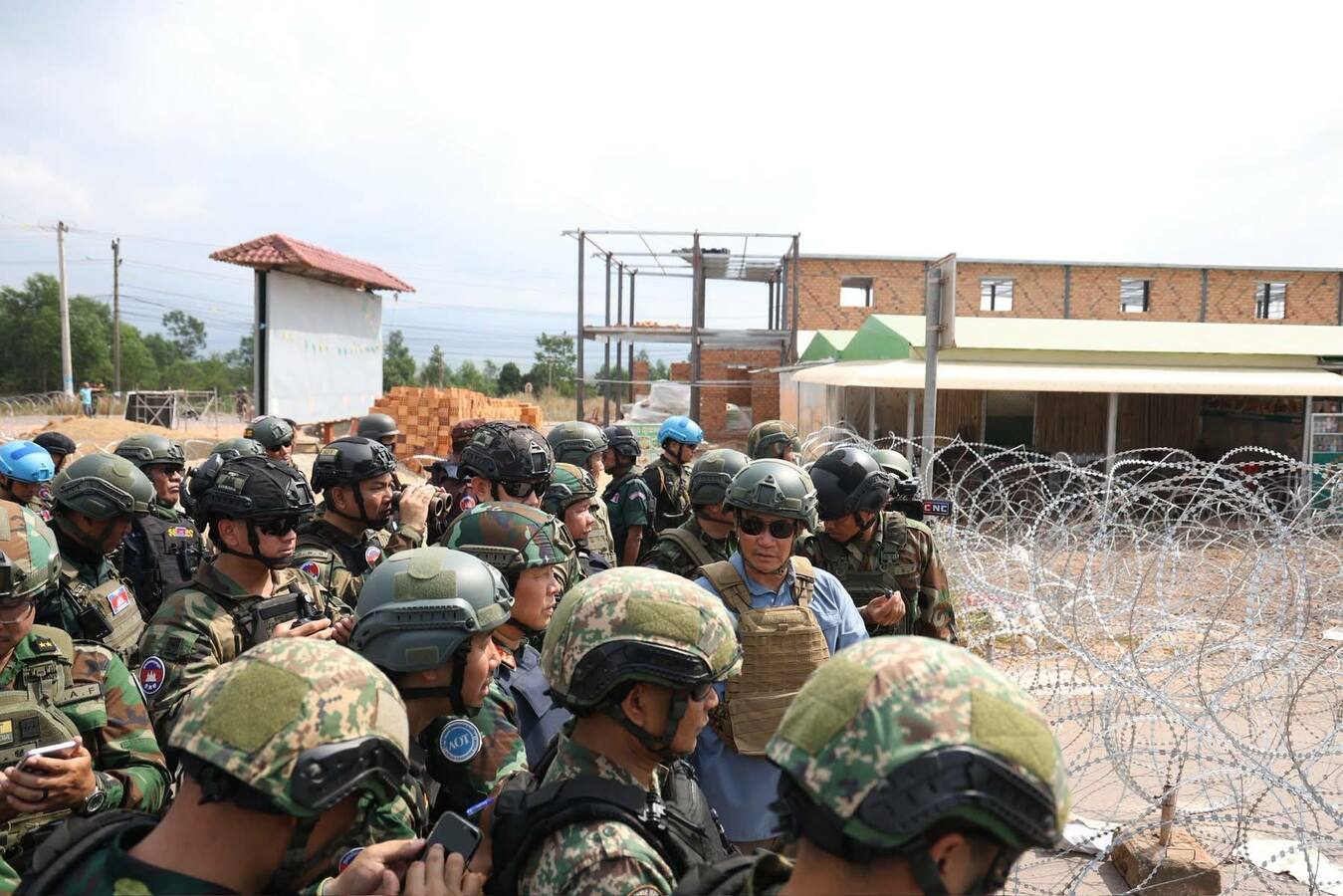 Cambodia Protests Thai Military Actions, Says Sovereignty and Territorial Integrity Have Been Violated
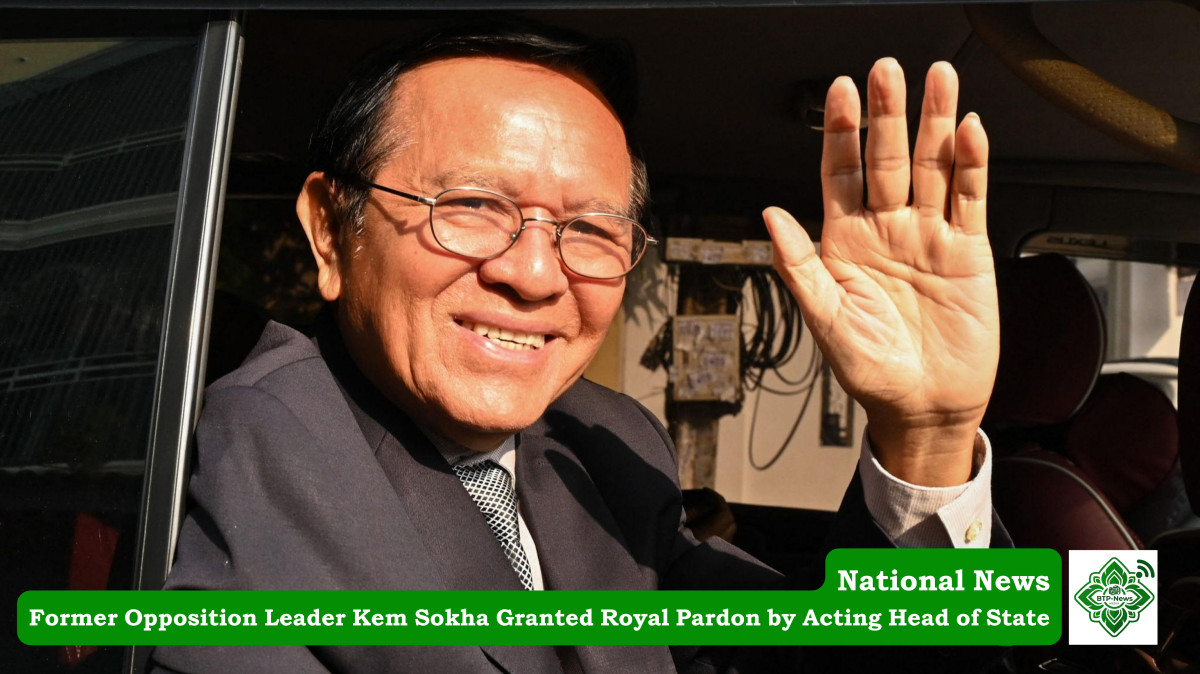 Former Opposition Leader Kem Sokha Granted Royal Pardon by Acting Head of State
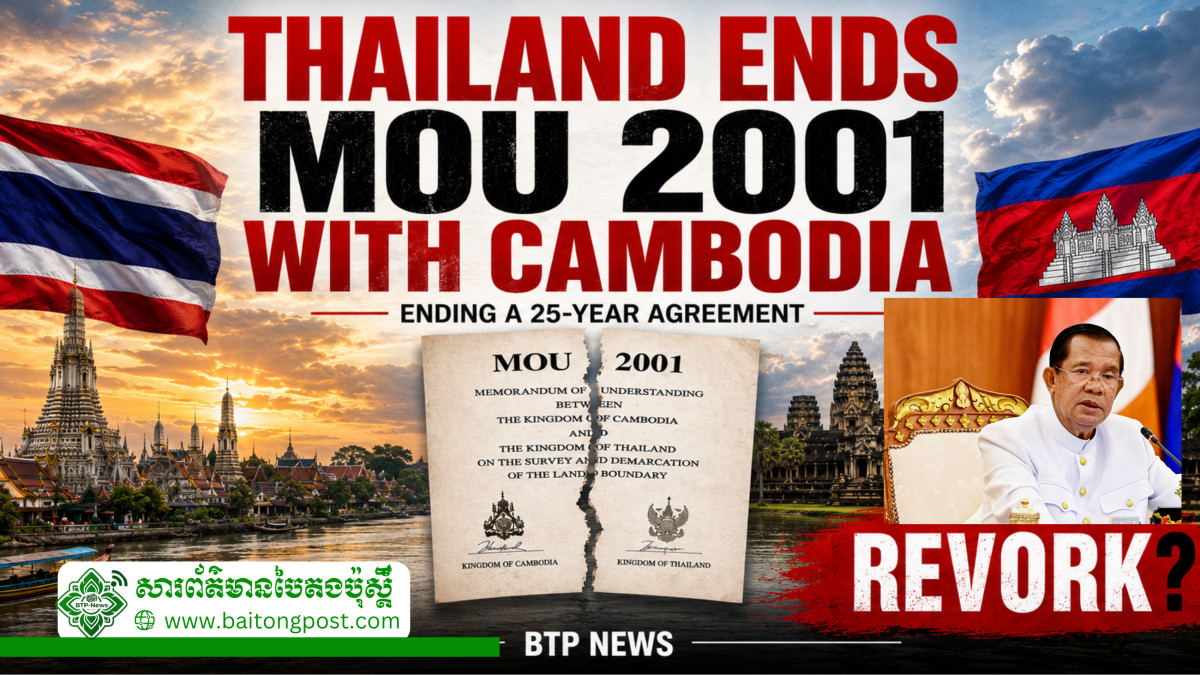 Cambodia’s Acting Head of State Reaffirms International Legal Approach
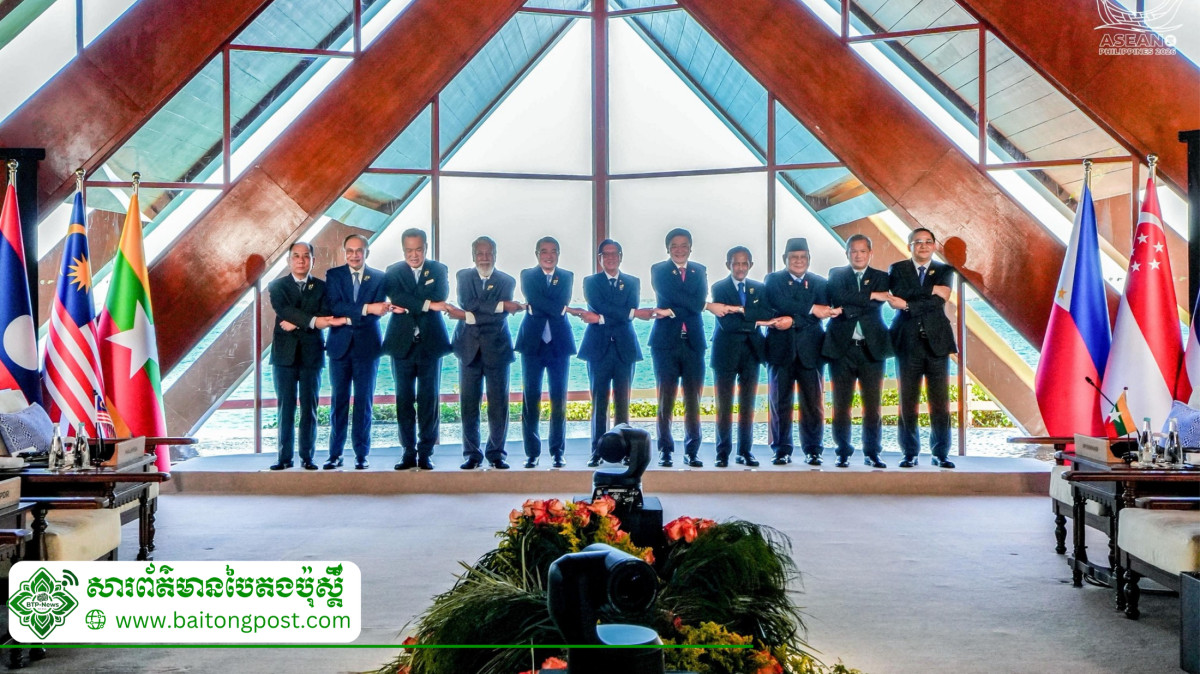 ASEAN Leaders Reaffirm Maritime Unity
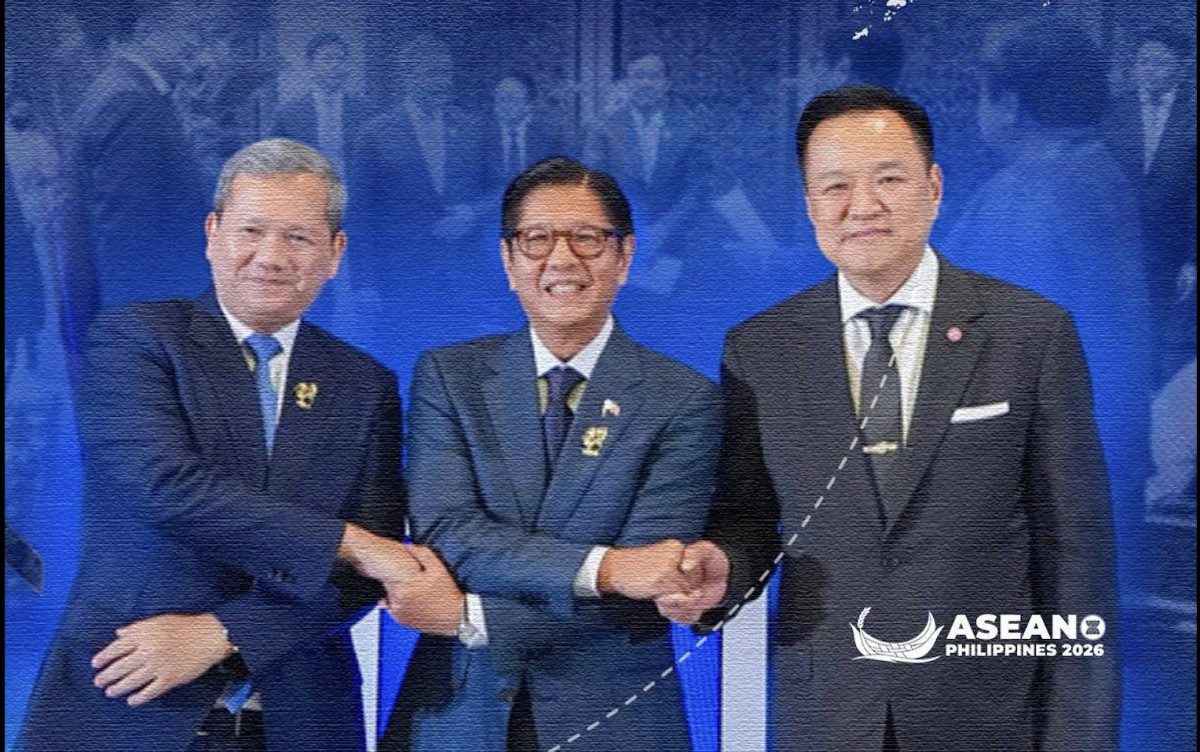 Cambodia and Thailand Agree to Task Foreign Ministers with Restoring Bilateral Relations
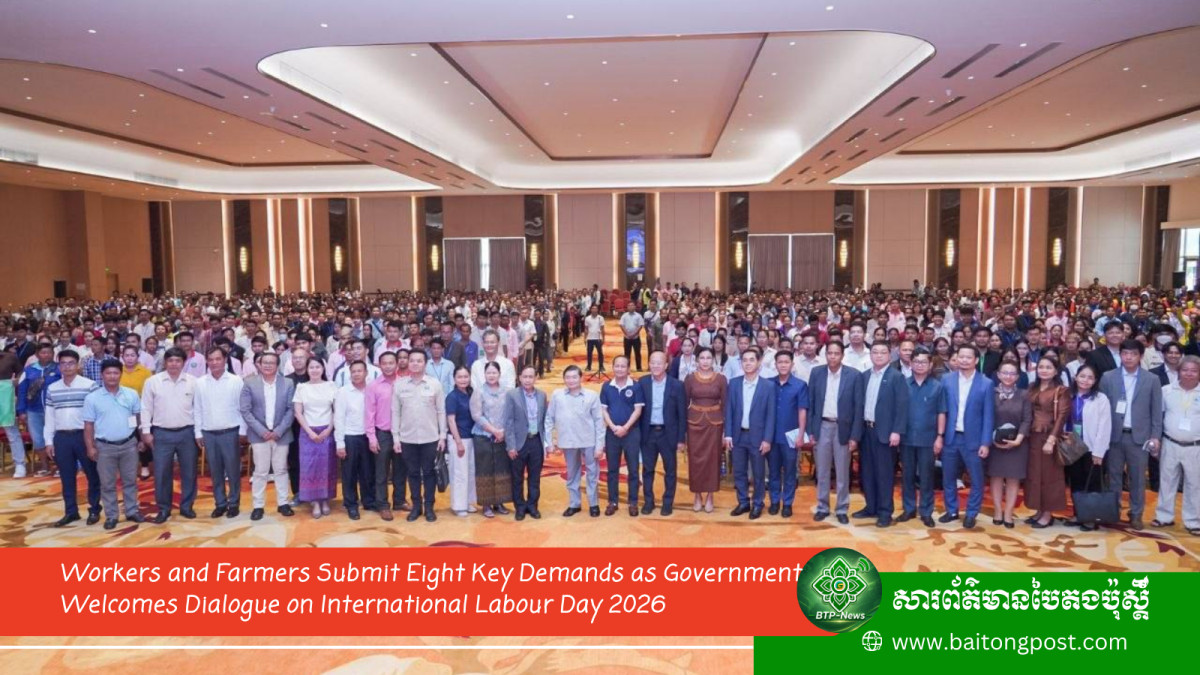 Workers and Farmers Submit Eight Key Demands as Government Welcomes Dialogue on International Labour Day 2026
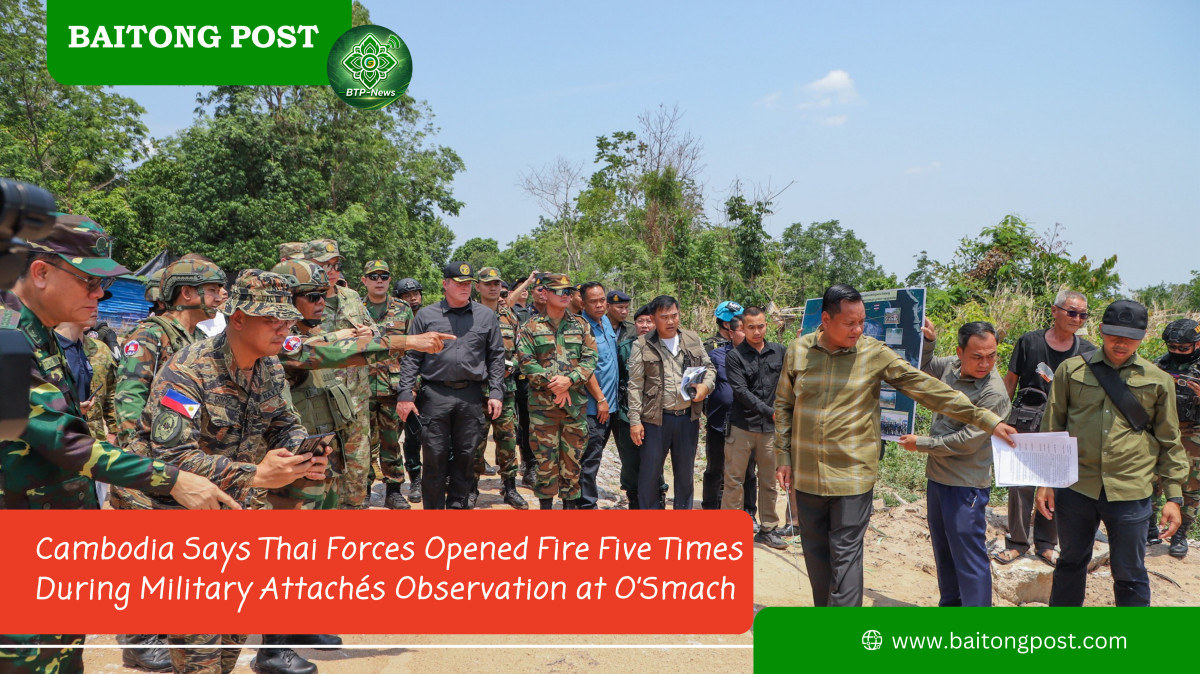 Cambodia Says Thai Forces Opened Fire Five Times During Military Attachés Observation at O’Smach
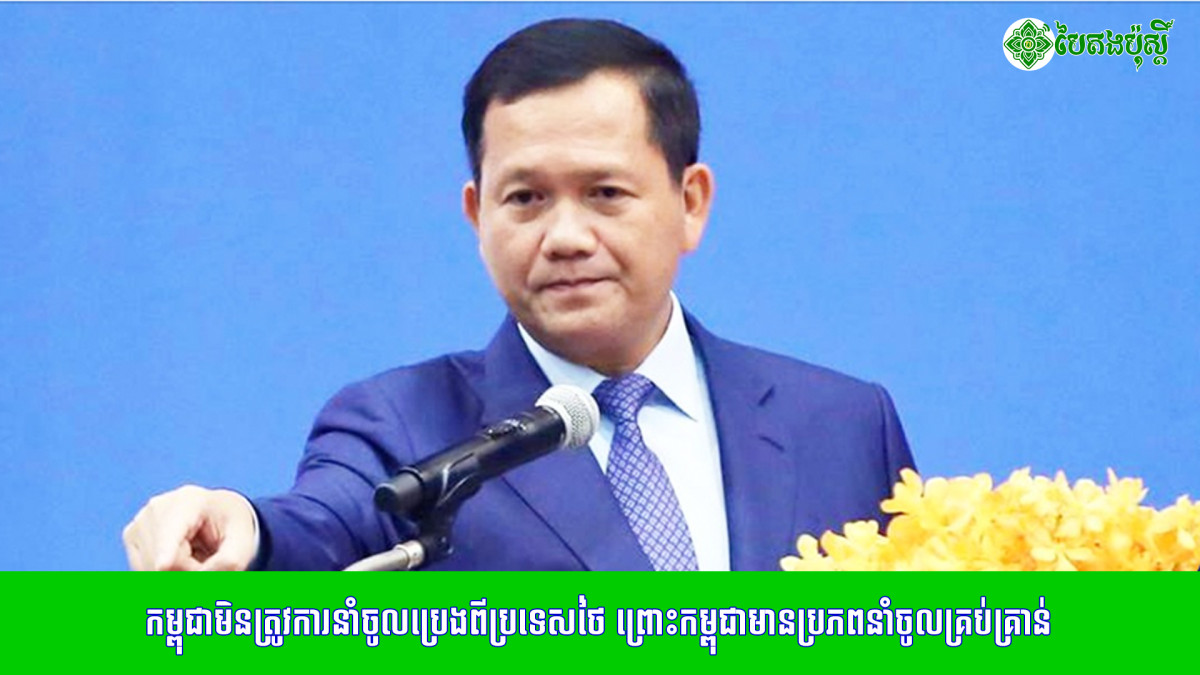 Breaking News: Cambodia Says It Does Not Need Fuel Imports from Thailand
20-មិថុនា-2026 - ម៉ោង 12:36:PM
25-ឧសភា-2026 - ម៉ោង 10:43:PM
13-ឧសភា-2026 - ម៉ោង 09:56:AM
11-ឧសភា-2026 - ម៉ោង 10:11:AM


© ២០២៣ រក្សាសិទ្ធិគ្រប់យ៉ាងដោយ BAITONGPOST
#35,St 1013, Phnom Penh Thmei, Sen Sok, , Phnom Penh, Cambodia
