
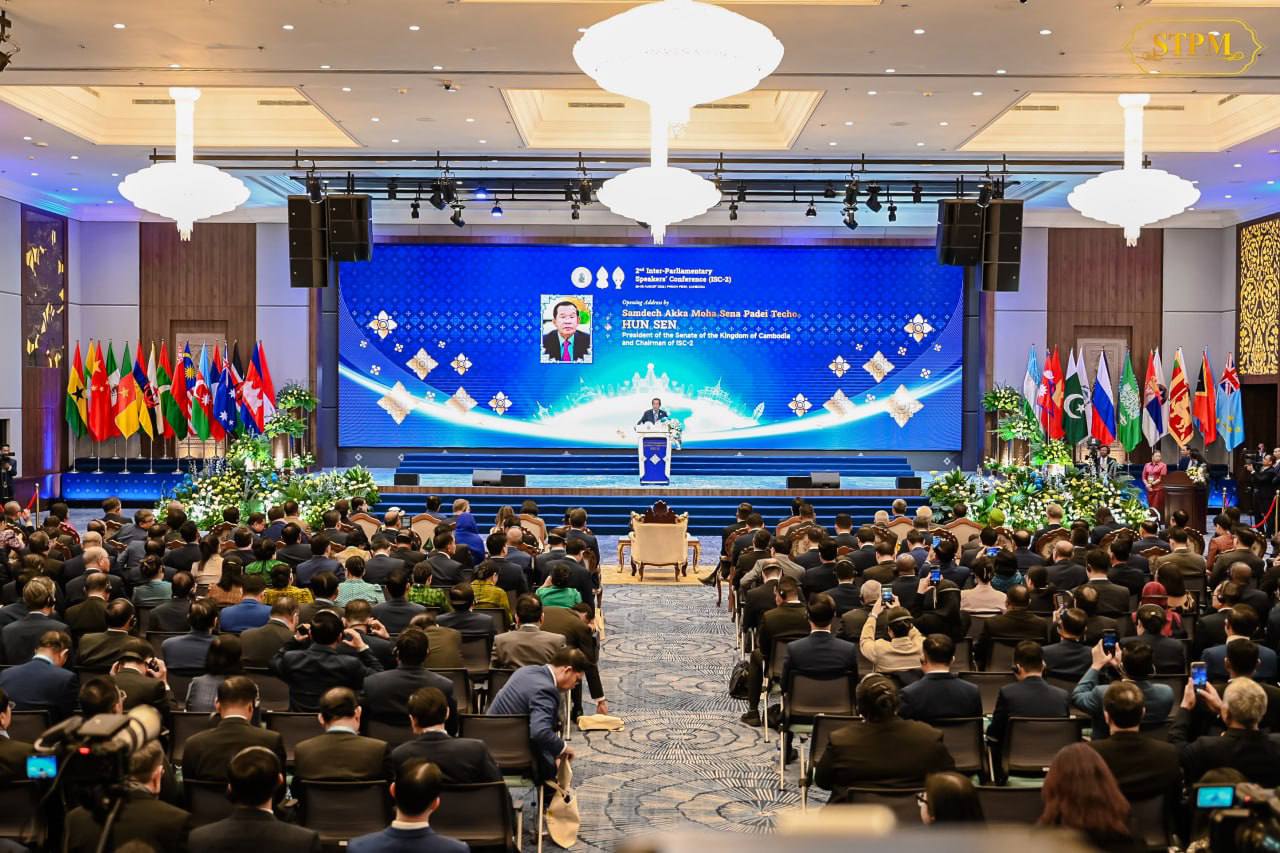
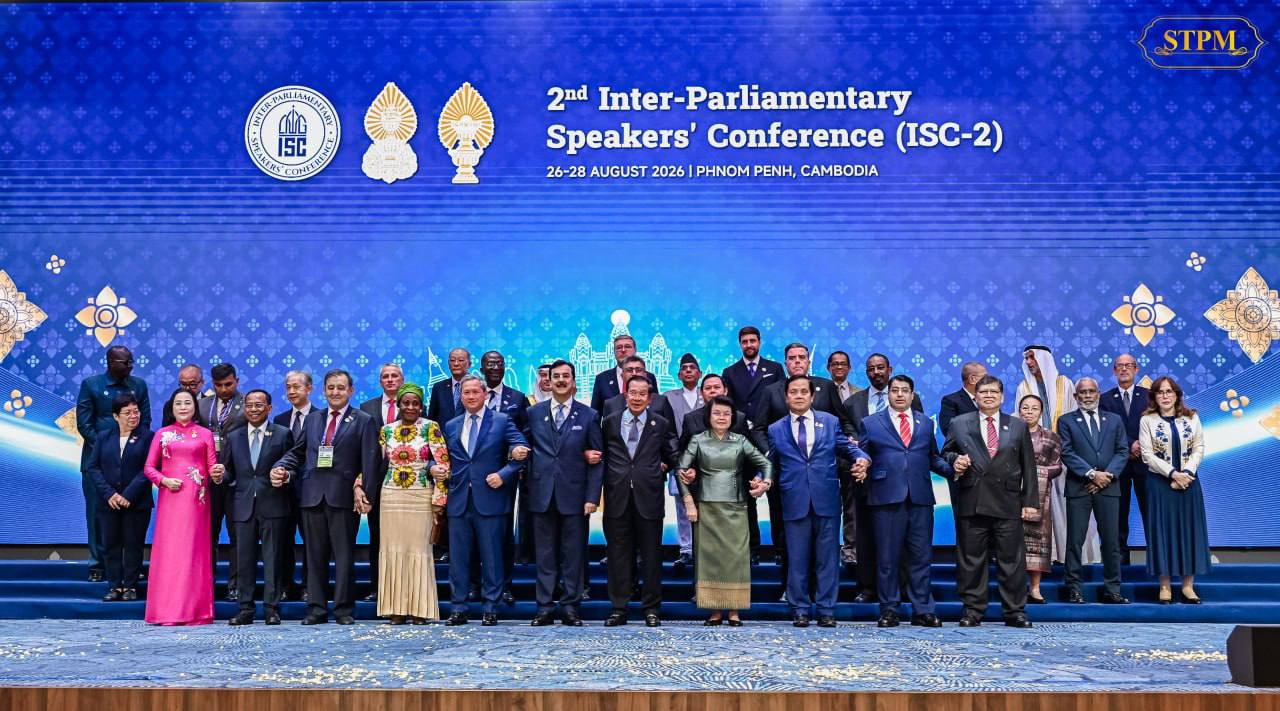
PHNOM PENH, Cambodia’s Senate has issued a statement responding to remarks by the President of the Thai Senate concerning comments made by Samdech Akka Moha Sena Padei Techo Hun Sen, President of the Senate of Cambodia, during the opening of the 2nd Inter-Parliamentary Speakers Conference (ISC-2) in Phnom Penh on August 27, 2026.
In its statement, the Cambodian Senate said Techo Hun Sen’s remarks were intended to explain what Cambodia considers to be acts of aggression by Thailand against Cambodia’s territorial integrity, while reaffirming the principles of national sovereignty, territorial integrity, international law, the Charter of the United Nations, and the peaceful settlement of disputes.
The statement outlined nine key points in response to the Thai side’s position.
On the first point, the Cambodian Senate said that combating transnational crime and online scams is necessary and legitimate, but such issues cannot be used as a justification for violating another country’s sovereignty or territorial integrity.
The Senate stated: “Combating transnational crime is necessary and lawful. However, such cooperation cannot be used to override the fundamental principles of sovereignty, territorial integrity and the prohibition of the use of force.”
The Senate also referred to the concept of “modern warfare,” arguing that contemporary conflicts can take various forms, including the use of security justifications, military operations, information warfare and attempts to create new realities on the ground.
Regarding allegations concerning attacks on civilian structures, the Cambodian Senate stressed the principles of international humanitarian law, particularly the distinction between civilian objects and military objectives.
The Senate stated: “If locations claimed to be military targets are, in fact, civilian in nature, those locations are protected under the fundamental principle of distinction between civilian objects and military objectives.”
It added that any legal assessment should be based on independently verifiable facts, particularly the actual nature and use of each location.
The third point was presented by the Cambodian Senate as one of the most strategically significant issues. It warned against what it described as an “aggressive salami-slicing strategy.”
According to the statement, the strategy refers to gradually and incrementally changing the situation on the ground and subsequently using the resulting reality as a basis for territorial claims.
The Senate said: “This is Thailand’s undeniable tactic of creating a new situation on Cambodia’s territory on the ground.”
Cambodia linked the concept to the term “fait accompli”—a situation created in practice on the ground and subsequently used to support political or territorial claims.
The Cambodian Senate also responded to the Thai Senate President’s claim that Cambodia had “fired first” and that Thailand had acted within the framework of a lawful right to self-defence, while implementing the Joint Statement of December 27, 2025.
Cambodia characterized these claims as unilateral assertions by Thailand. The Senate stated: “These are merely unilateral claims by the Thai side and are no different from propaganda that distorts the facts, turns white into black and black into white, misleads public opinion, and seeks to conceal its acts of aggression against Cambodia’s territorial integrity.”
The Senate further argued: “One party cannot simultaneously act as the claimant and the judge of its own claims.”
On the fifth point, Cambodia said it could not accept any interpretation of the December 27, 2025 Joint Statement that would transform the ceasefire agreement into recognition of sovereignty or territorial rights over areas Cambodia considers to be its territory.
The Senate stated: “A ceasefire cannot be used as a basis to create new rights over territory, legalize an unlawful occupation, or consolidate a unilateral situation into a new reality on the ground—a fait accompli.”
Cambodia maintained that sovereignty and boundary issues must be addressed through applicable treaties and agreements, international law and peaceful dispute-resolution mechanisms.
Regarding the Thai Senate President’s argument that the dispute “should not be internationalized,” the Cambodian Senate said Cambodia had no intention of turning a bilateral dispute into an international issue for political purposes.
However, Cambodia argued that if Thailand wanted to avoid international attention, the effective solution was not to ask Cambodia to remain silent.
The Senate stated: “The most effective way is not to demand that Cambodia remain silent, but to address the causes and the actual conditions that have given rise to these concerns.”
Cambodia called on Thailand to withdraw its forces from areas Cambodia claims as its territory, stop activities that could alter the situation on the ground, and allow Cambodian civilians who had been displaced to safely and with dignity return to their homes.
The Cambodian Senate also rejected the view that international attention was responsible for making the situation more serious. It stated: “International attention is not the cause of the problem, but a consequence of the actual situation on the ground.”
According to Cambodia, the most effective way to prevent the issue from continuing to concern the international community is to restore respect for Cambodia’s sovereignty and territorial integrity, uphold international law and existing commitments, and resolve outstanding issues peacefully.
On the eighth point, the Cambodian Senate said that the responsible use of regional and international mechanisms should not be regarded as confrontation.
The Senate stated: “Peaceful legal and diplomatic procedures have been established for specific purposes: to help states clarify their positions, prevent escalation, reduce misunderstandings, and resolve disputes in an orderly and lawful manner.”
Cambodia said such mechanisms could help achieve a fair and lasting solution while strengthening confidence through transparency, accountability, legal clarity and restraint.
In its final point, the Cambodian Senate agreed that mutual trust, restraint, honesty and integrity are essential to maintaining peaceful relations between neighbouring countries.
However, it stressed that trust must be mutual and demonstrated through concrete actions rather than words alone. The Senate stated: “Building trust must be mutual and demonstrated through consistent actions, not merely words.”
Cambodia added that one side cannot be expected to build trust alone while neutral procedures are obstructed, selectively interpreted or abandoned.
It further stated: “Calls for dialogue cannot be credible while actions on the ground increase tensions and undermine trust.”
At the conclusion of the statement, the Cambodian Senate reaffirmed that, despite significant disagreements with Thailand, Cambodia remains committed to resolving the border dispute with Thailand and all neighbouring countries through peaceful means, in accordance with international law and existing bilateral agreements.
The statement concluded with a reaffirmation of Cambodia’s fundamental position: “Border lines must not be changed by force.”
The Cambodian Senate’s response places the dispute within the broader framework of international law and diplomacy, focusing on three central positions: rejecting any unilateral change to the border situation through force, using peaceful legal and diplomatic mechanisms, and calling for concrete actions to rebuild trust and prevent further escalation between the two neighbouring countries.
 Cambodia Senate Responds to Thai Senate President, Warns of “Salami-Slicing Strategy”
 Cambodia Raises Thailand Border Conflict at Global Parliamentary Summit
 Cambodian Government Strongly Protests Thai Prime Minister’s Unauthorized Visit to Cambodia’s Sovereign Territory in Preah Vihear Province
 UK Minister Calls for Peaceful Cambodia–Thailand Dialogue During First Visit to Cambodia
 Cambodia Lodges Fresh Protest Against Thailand Over Border Road and Military Bunkers
 Cambodia Hosts ASEAN Civil Service Meetings to Advance Public Service Innovation
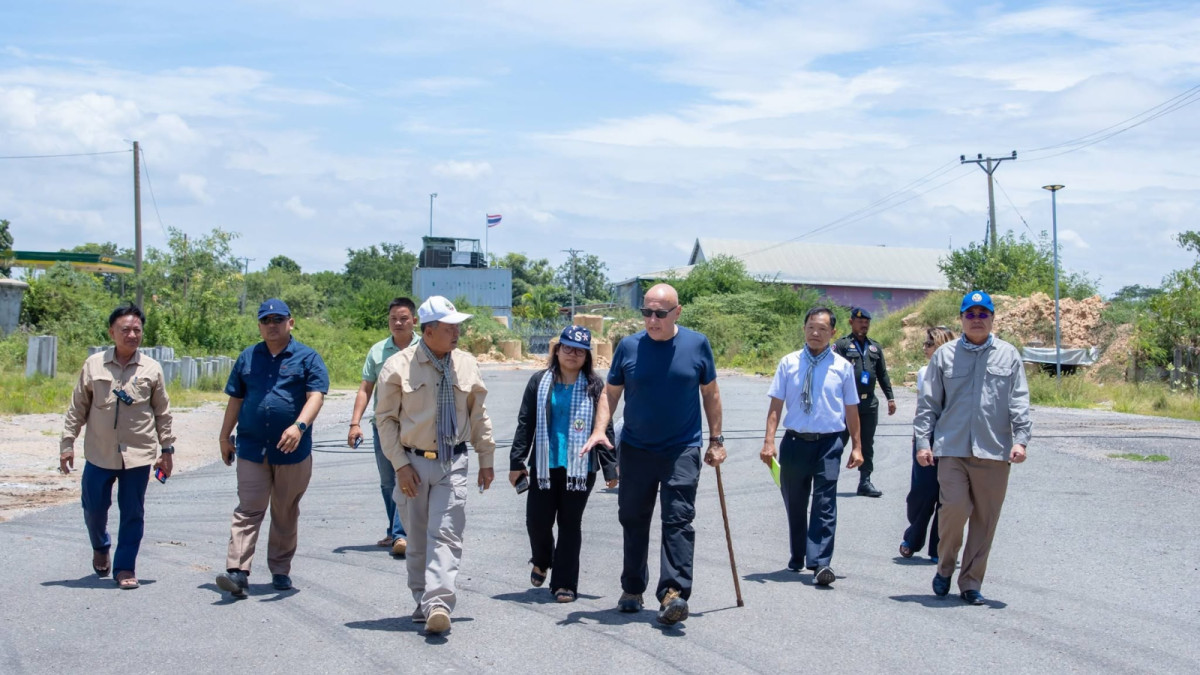 Thailand Rejects UN Expert’s Findings on Cambodia Human Rights Report, Calls for Balanced Assessment
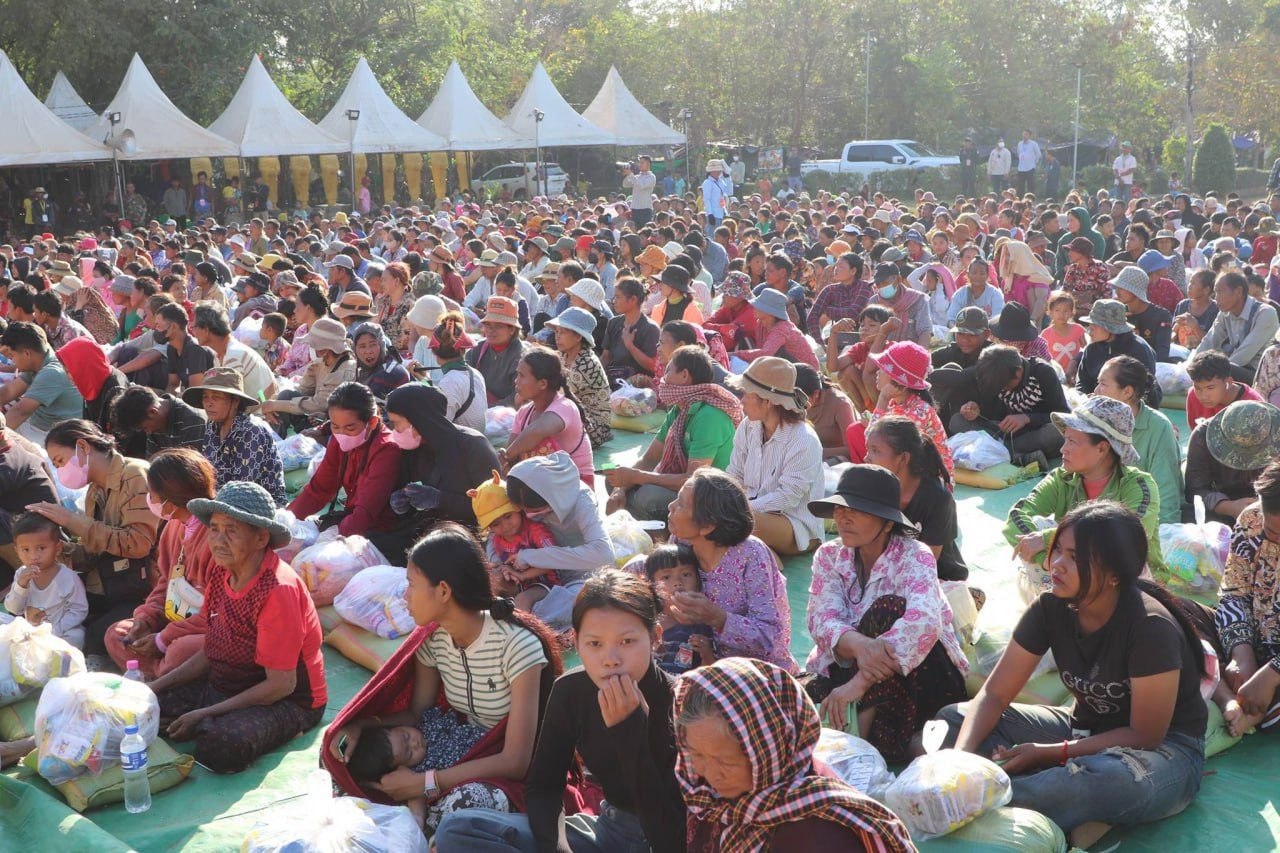 UN Special Rapporteur Calls for Safe Return of Displaced Cambodians
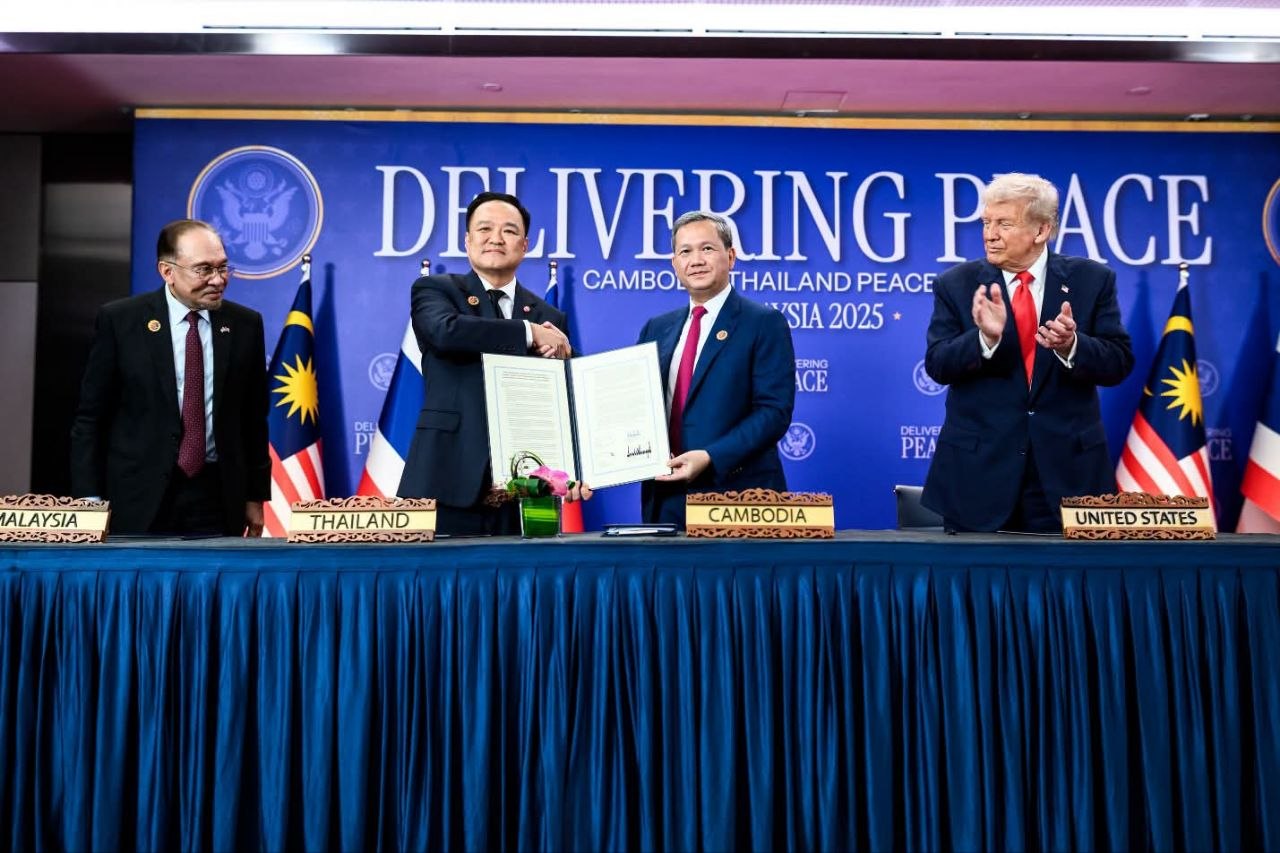 U.S. Embassy Highlights Cambodia–Thailand Peace Agreement as U.N. Expert Assesses Border Conflict's Human Rights Impact
27-សីហា-2026 - ម៉ោង 01:27:PM
26-សីហា-2026 - ម៉ោង 10:46:AM
25-សីហា-2026 - ម៉ោង 12:20:PM
22-សីហា-2026 - ម៉ោង 11:40:AM
© ២០២៣ រក្សាសិទ្ធិគ្រប់យ៉ាងដោយ BAITONGPOST
#35,St 1013, Phnom Penh Thmei, Sen Sok, , Phnom Penh, Cambodia
