
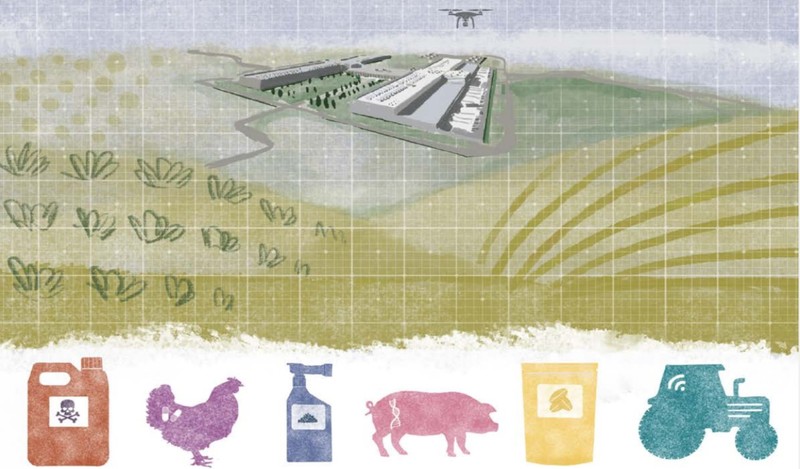
PHNOM PENH, As the world grapples with climate change, geopolitical tensions, and rising food prices, a new report warns that the global food and agricultural system is increasingly being controlled by a small number of multinational corporations that wield influence across nearly every stage of the food supply chain—from seeds to the food served on consumers' tables.
The report, "Top 10 Agribusiness Giants: Corporate Concentration in Food & Farming – 2026 Update," published by GRAIN and the ETC Group on July 30, 2026, finds that corporate concentration in agriculture has not slowed. Instead, it has expanded into emerging sectors, including artificial intelligence (AI), agricultural data, and gene-editing technologies. According to the report, this trend could leave farmers around the world increasingly dependent on private corporations.
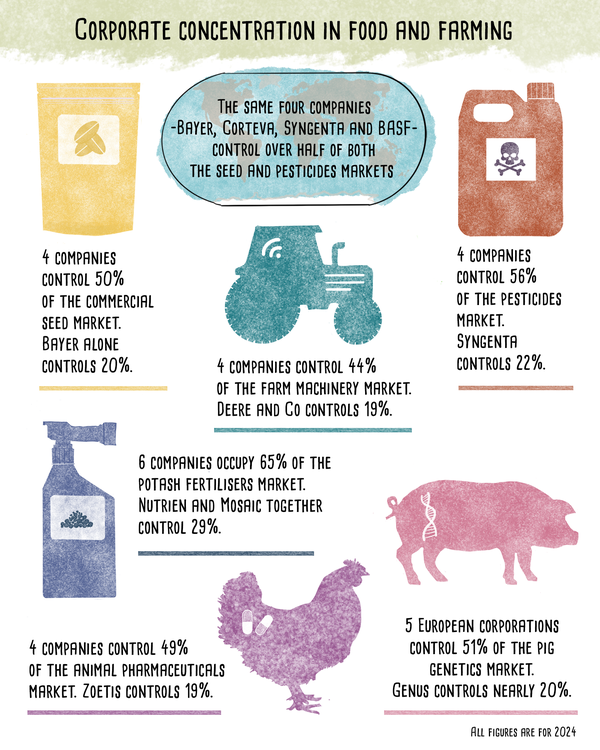
According to the report, the global agricultural market is currently divided into six key sectors: commercial seeds, pesticides, synthetic fertilizers, farm machinery, livestock genetics, and animal pharmaceuticals. Researchers found that five of these six sectors are now considered oligopolistic, meaning that just four companies control more than 40% of the global market.
One of the report's most significant findings concerns the commercial seed and pesticide industries. It states that Bayer, Corteva, Syngenta, and BASF together control approximately 52% of the global commercial seed market and around 62% of the global pesticide market. The report argues that this level of market concentration gives a handful of corporations increasing influence over prices, technological innovation, and the direction of agricultural research.
In the pesticide sector, Syngenta remains the world's largest company, holding about 23% of the global market, while Bayer, BASF, and Corteva also maintain substantial market shares. Overall, the top ten pesticide companies account for more than 80% of the global market, according to the report.
The report also highlights significant concentration in the livestock genetics industry. Researchers note that just three companies supply poultry breeding stock to more than 120 countries through subsidiaries, licensing agreements, and commercial partnerships. The report describes this as one of the clearest examples of extreme corporate concentration within the global food system.
Beyond market concentration, the report links these trends to a series of global crises. It argues that the COVID-19 pandemic, the war in Ukraine, conflicts in the Middle East, climate change, and disruptions to global supply chains have exposed the vulnerabilities of a food system that depends heavily on a small number of multinational suppliers. When fertilizer or pesticide supplies are disrupted, the effects can spread rapidly throughout the supply chain, driving up production costs and food prices.
The report further argues that corporate power no longer ends with the sale of seeds or agricultural chemicals. Major agribusiness companies are increasingly investing in artificial intelligence for agriculture, digital farming platforms, farmer data systems, gene-editing technologies, and carbon markets. Researchers warn that if these trends continue, future control of the food system may extend beyond agricultural inputs to include ownership of data and influence over farmers' production decisions.
Although the report does not provide a country-specific analysis of Cambodia, its findings are particularly relevant for developing countries that rely heavily on imported seeds, fertilizers, pesticides, and agricultural technologies. The report suggests that these countries could become increasingly vulnerable to fluctuations in international markets and to strategic decisions made by a small number of global agribusiness corporations.
In its conclusion, GRAIN and the ETC Group call on governments and international institutions to strengthen competition laws, increase scrutiny of corporate mergers and acquisitions, and expand support for farmer-led food systems. The report argues that promoting agroecology, protecting community seed systems, and strengthening local food markets are essential to preserving diversity, resilience, and fairness within the global food system.
Without stronger regulatory measures, the report concludes, corporate concentration is likely to continue expanding, giving a small group of multinational agribusiness companies even greater influence over the future of global agriculture and food security.

 The Growing Concentration of Agribusiness Giants Is Reshaping the Global Food System
 Farmers Fear Livelihood Losses and Crop Damage Amid Unpredictable 2026 Rainy Season
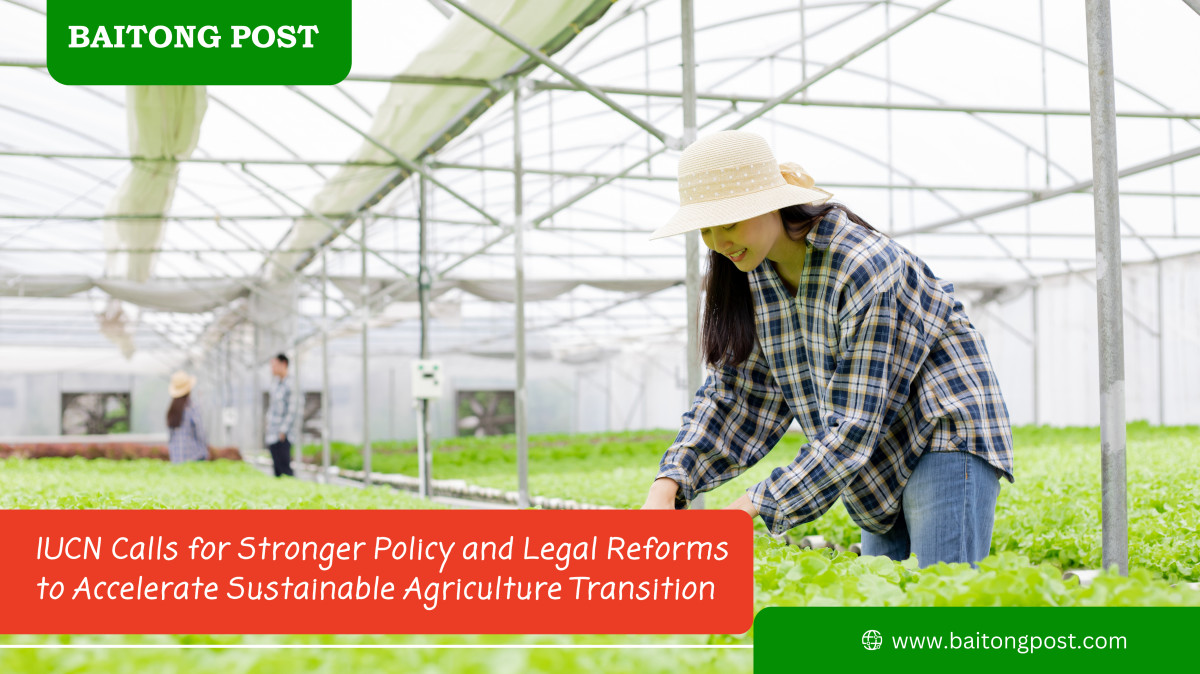 IUCN Calls for Stronger Policy and Legal Reforms to Accelerate Sustainable Agriculture Transition
 Minister of Agriculture Launches Public Forum to Disseminate 2026 Program Budget and Citizen Budget
 Plants and Their Stories
20-កក្តដា-2026 - ម៉ោង 04:07:PM
29-មេសា-2026 - ម៉ោង 04:11:PM
03-មេសា-2026 - ម៉ោង 11:17:AM
04-តុលា-2023 - ម៉ោង 10:20:AM


© ២០២៣ រក្សាសិទ្ធិគ្រប់យ៉ាងដោយ BAITONGPOST
#35,St 1013, Phnom Penh Thmei, Sen Sok, , Phnom Penh, Cambodia
