
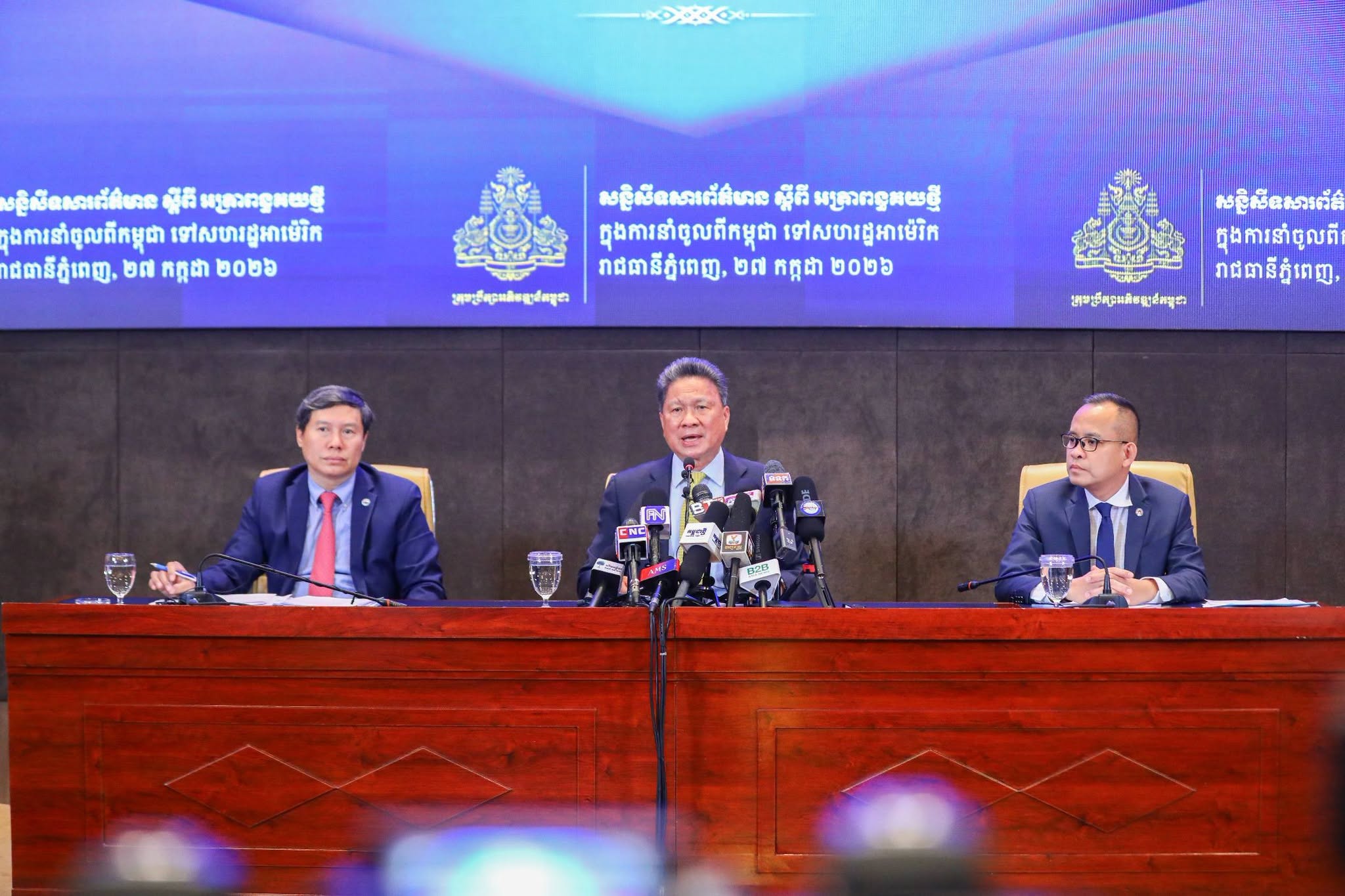
PHNOM PENH, Cambodia said a new 10% U.S. tariff on its exports under a Section 301 trade review would allow the country to maintain a competitive advantage over several Southeast Asian rivals, while the government pledged to continue reforms aimed at attracting foreign investment.
The comments were made by Deputy Prime Minister Sun Chanthol, First Vice Chairman of the Council for the Development of Cambodia (CDC), during a press conference following the conclusion of the U.S. tariff review on Cambodian exports.
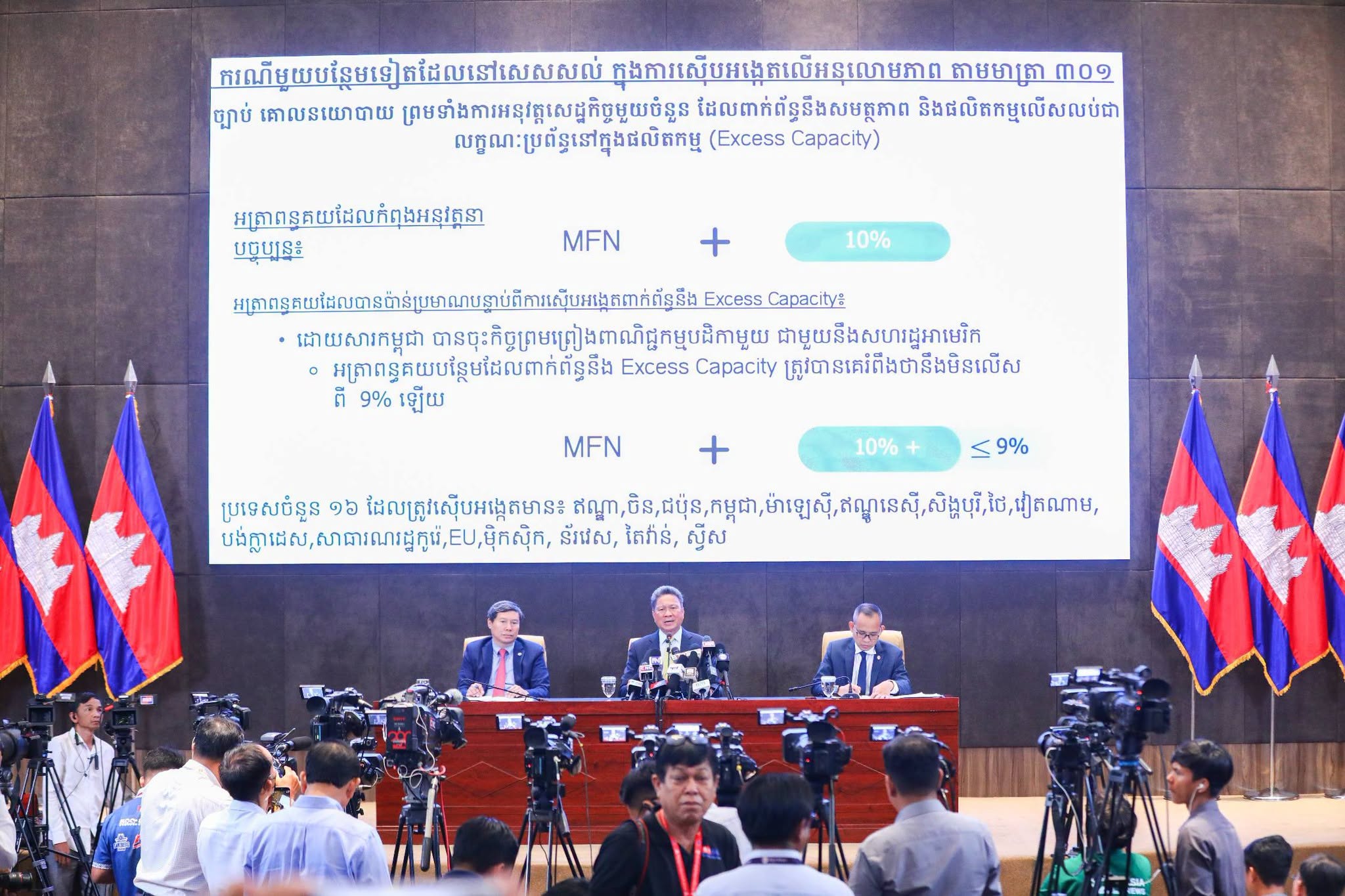
According to Sun Chanthol, the Office of the United States Trade Representative (USTR) set an additional 10% tariff on Cambodian exports, compared with 12.5% tariffs imposed on exports from competing ASEAN countries, including Vietnam and Thailand.
"The United States has made it clear that Cambodia will not lose its competitiveness or export advantage in the U.S. market compared with neighboring ASEAN countries," Sun Chanthol told reporters.
He said the tariff outcome would help Cambodia remain an attractive destination for export-oriented manufacturing and foreign direct investment despite shifting global trade policies.
Mr. Sun Chanthol said Cambodia would continue implementing reforms to strengthen the country's investment climate and improve its competitiveness in regional and global markets.
"The Royal Government of Cambodia will continue to promote and strengthen an investment climate that is increasingly attractive and favorable for both domestic and foreign investors through incentive packages and comprehensive reforms across all sectors, ensuring Cambodia remains competitive regionally and internationally," he said.
Mr. Sun Chanthol said Cambodia continues to simplify investment procedures by reducing administrative requirements, expediting investment registration and allowing foreign investors to freely repatriate profits in accordance with Cambodian investment law. He added that qualified investment projects also benefit from exemptions on import duties for machinery, equipment and production raw materials.
He said the reforms are intended to improve the ease of doing business, reduce operating costs and reinforce Cambodia's position as a competitive manufacturing and investment hub in Southeast Asia.
Sun Chanthol added that Cambodia concluded trade negotiations with the United States in 2025 on reciprocal tariff arrangements, under which Cambodian exports were assigned a 19% tariff rate.
"Under U.S. law, any additional tariffs imposed in the future would not be stacked or applied cumulatively. The total tariff rate applicable to Cambodian exports will not exceed the 19% ceiling agreed under the reciprocal tariff arrangements," he said.
According to Mr. Sun Chanthol, the U.S. tariff framework does not allow additional tariff measures to be applied cumulatively in a manner that would raise the overall tariff burden on Cambodian exports above 19%.
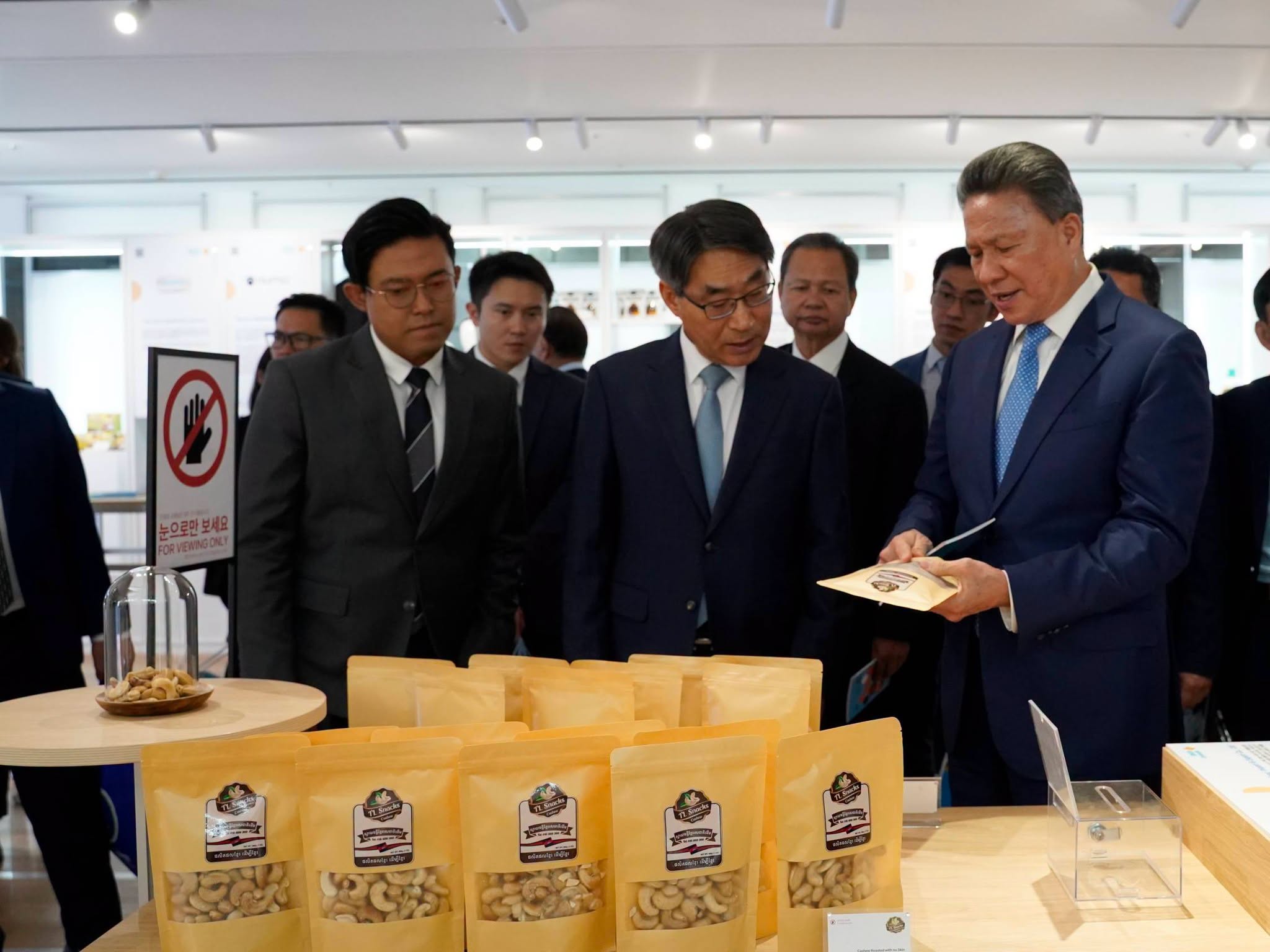
Mr. Sun Chanthol said Cambodia's young workforce remains one of the country's key economic strengths, noting that its labor force is adaptable to new technologies and continues to support productivity growth.
He added that Cambodia's labor costs remain competitive relative to productivity, allowing manufacturers to maintain cost-efficient production.
The deputy prime minister also highlighted Cambodia's progress in expanding renewable energy generation.
"Approximately 63% of Cambodia's national electricity supply comes from renewable energy sources, particularly solar power, helping meet the growing Environmental, Social and Governance (ESG) requirements of international manufacturers and investors," he said.
He said the country's increasing reliance on clean energy enhances Cambodia's attractiveness to multinational companies seeking sustainable production locations.
During the briefing, Mr. Sun Chanthol rejected allegations linking Cambodian exports to forced labor, saying the country continues to comply with international labor standards.
"Cambodia consistently complies with international labor standards, and the lower tariff rate reflects recognition of the government's strong commitment and cooperation in addressing labor rights concerns," he said.
Mr. Sun Chanthol said the government has established a national committee to monitor, inspect and assess production supply chains and imported materials that could be associated with forced labor.
"The establishment of this national mechanism demonstrates Cambodia's commitment to ensuring that products manufactured and exported from Cambodia are produced with integrity and fully comply with international labor and trade standards," he said.
He said the mechanism was created to strengthen oversight of supply chains and demonstrate Cambodia's commitment to eliminating labor rights violations while ensuring that its exports meet international market requirements.
Mr. Sun Chanthol said Cambodia's political stability, lasting peace and continued governance reforms remain fundamental factors supporting long-term investor confidence.
He said the combination of competitive tariff treatment, an open investment regime, administrative reforms, a young workforce and expanding renewable energy capacity would help Cambodia continue attracting foreign direct investment despite uncertainty in the global trading environment.
At the time of the press conference, the Office of the United States Trade Representative (USTR) had not publicly responded to the Cambodian government's characterization of the tariff decision or to Sun Chanthol's interpretation of how U.S. law would apply to future tariff measures.



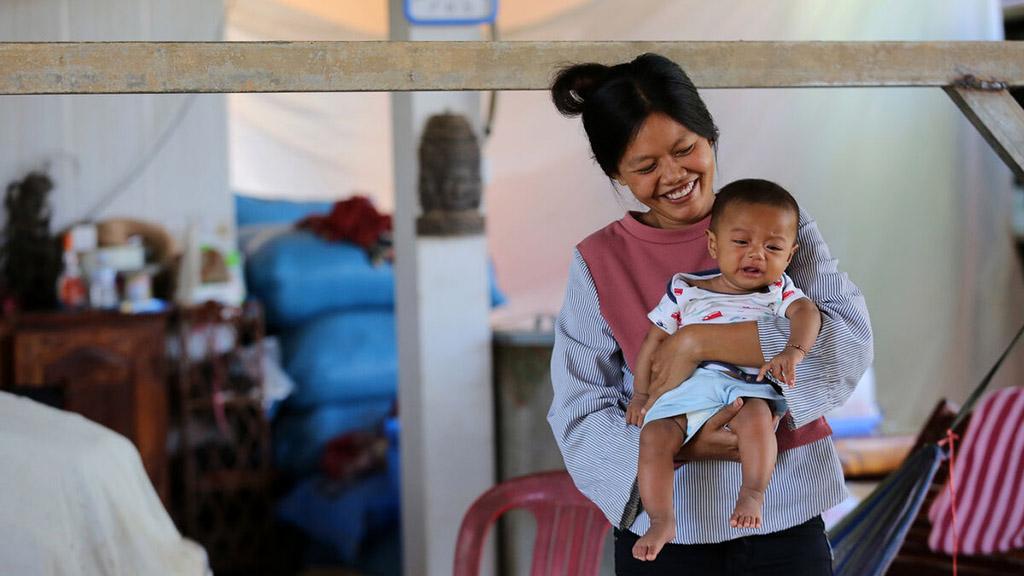 ADB to Deploy $450 Million to Help Cambodia and Sri Lanka Withstand Middle East Conflict Fallout
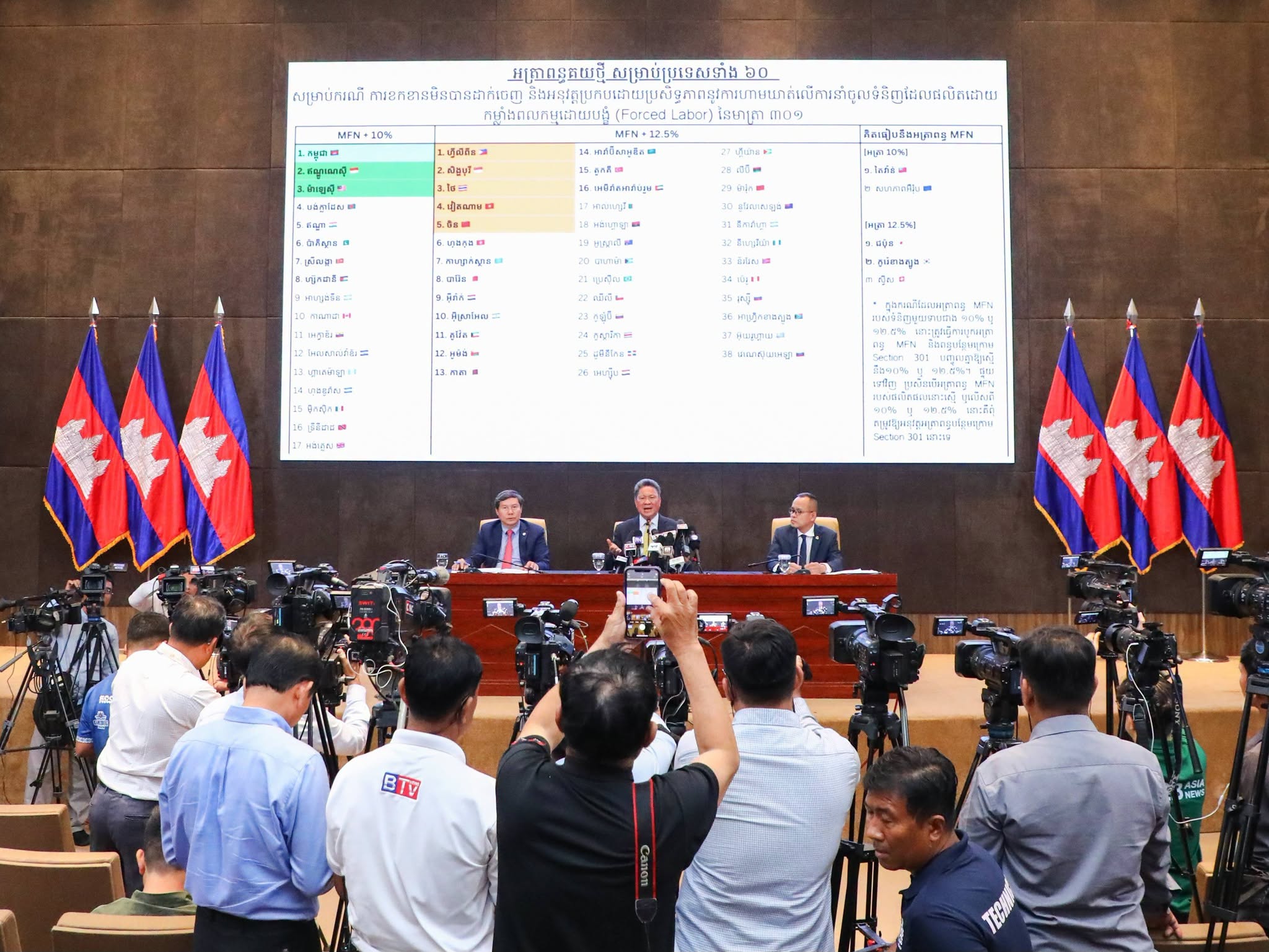 Cambodia Says Lower U.S. Tariff Will Preserve Investment Competitiveness Against ASEAN Rivals
 Prime Minister Calls for Stronger Support for Cambodia's Small and Medium Enterprises
 ADB to Mobilize $30 Billion by 2030 to Support ASEAN
 Cambodia Fuel Prices Surge as Middle East Conflict Shakes Global Oil Markets
 Timor-Leste has signed an agreement to buy 4,000 tons of rice from Cambodia for the first time
 Asian Development Bank (ADB) Provides $100 Million Loan for Economic Skills Development Program
 The Ministry of Labor Continues Negotiations as Unions Advocate for $215 Minimum Wage
28-កក្តដា-2026 - ម៉ោង 01:06:PM
19-កក្តដា-2026 - ម៉ោង 09:33:AM
11-ឧសភា-2026 - ម៉ោង 04:15:PM
29-មេសា-2026 - ម៉ោង 10:15:AM


© ២០២៣ រក្សាសិទ្ធិគ្រប់យ៉ាងដោយ BAITONGPOST
#35,St 1013, Phnom Penh Thmei, Sen Sok, , Phnom Penh, Cambodia
